
What is closeboard fencing installation?
Closeboard fencing installation is the building of a new boundary fence from vertical featheredge boards fixed over horizontal rails and strong posts. It is the traditional heavy-duty garden fence, used where privacy, strength and a long life matter more than the lowest price.
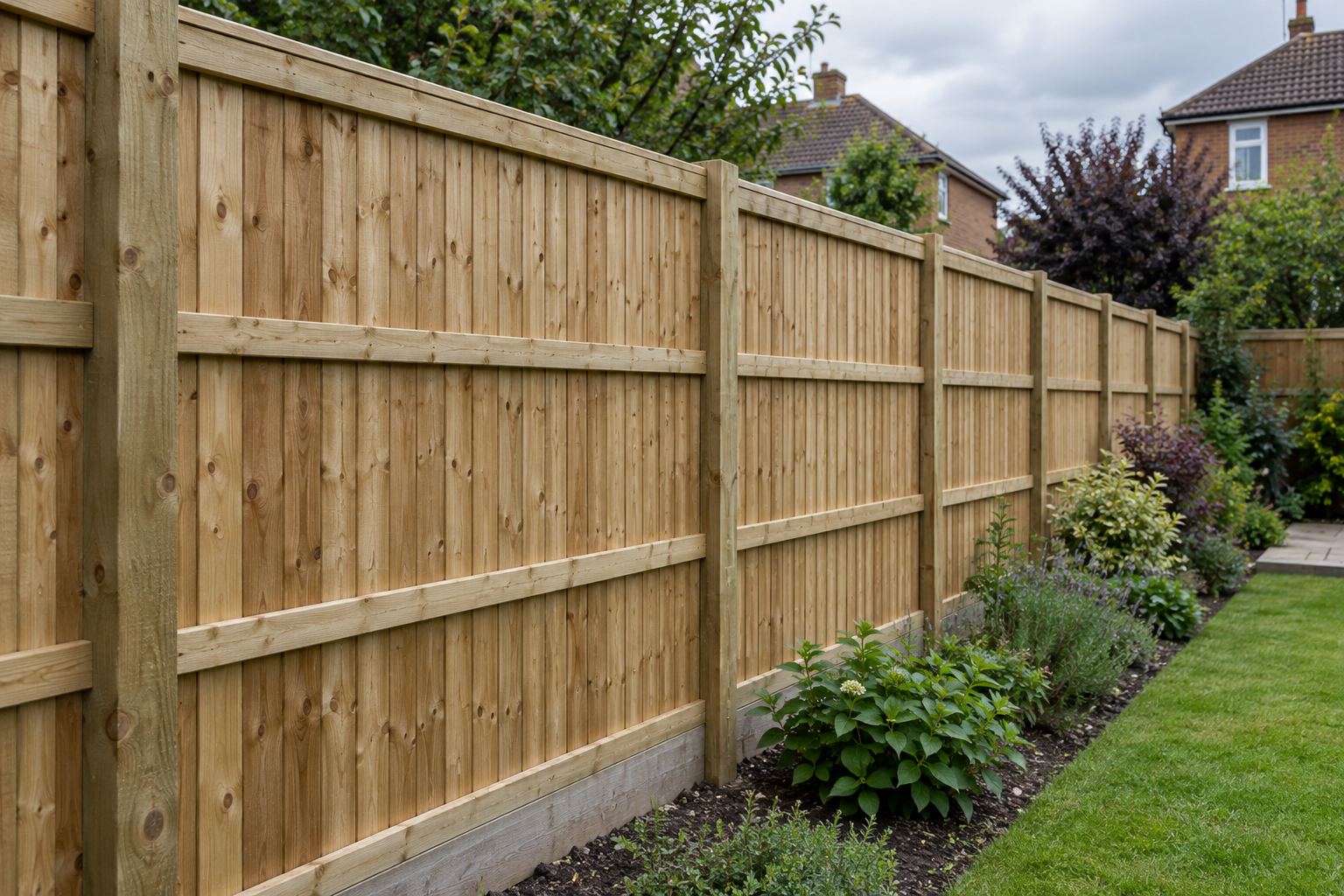
Because it is assembled on site, closeboard follows uneven ground and can be cut to the exact length of the boundary. Check the post depth and how the boards will be kept off the soil.
Signs you need closeboard fencing installation
- An old fence leans, rocks or has blown down in the wind
- The boundary is bare and the garden is overlooked
- Panels have rotted at the base and the gaps keep growing
- Pets or children are getting through or under the fence
- A slope makes standard panels step awkwardly
- A shared boundary needs replacing along its full length
Closeboard Fencing Installation: methods and options explained
- Timber posts. The standard choice. Pressure-treated 100 x 100 mm posts set in concrete suit most gardens and keep the price down.
- Concrete posts. Posts with compatible gravel-board and rail connections. They cost more but do not rot, so they suit exposed or wet sites.
- Raked or stepped. On a slope the boards can follow the ground in a smooth line, or the fence can step in level bays. Raked is neater and slower.
- Capping and gravel boards. A capping rail finishes the top and sheds water; a gravel board keeps the bottom boards clear of damp soil. Both extend the fence's life.
What to include when asking for a quote
Measure each run and note its finished height. For a sloping side boundary, describe the fall in the ground, and any trees, walls or sheds within a metre of the line change how the posts can be set.
Say what is standing there now and whether it comes out, because removing and carting away old rails and concrete footings is hours of labour. Mention if the boundary is shared and who owns the fence; a quote should not be for a fence you do not own.
Ask for the post type and section, the rail count, the board thickness, the treatment, and whether gravel boards and a capping rail are included. Check that the price states who clears the waste and whether VAT is added.
How much does closeboard fencing installation cost?
| Type of job | Typical cost |
|---|---|
| Short run up to 10 m, timber posts | £700–£1,100 |
| Typical garden boundary, 15–25 m with gravel boards | £1,100–£2,000 |
| Long run, sloping ground, concrete posts or capping rail | £2,000–£2,500+ |
These are indicative UK budgeting figures, not fixed quotes. Prices depend on the height, post type, ground and how much old fence has to come out.
A metre price is only useful if it states the posts, rails and boards behind it. Check each line before you compare totals.
The closeboard fencing installation process: what to expect
- Survey. The contractor measures the run, checks the ground and agrees the line with you.
- Remove. The old fence and its footings come out where there is one.
- Set the posts. Holes are dug, services avoided and posts bedded in concrete.
- Rails and boards. Rails are fixed, gravel boards set and the boards nailed on.
- Finish. A capping rail goes on, the line is checked and the waste is taken away.
Planning permission and building regulations
Planning rules differ across the UK. Check with the local planning authority before changing a boundary, especially beside a road or at a listed property. The linked Planning Portal guidance is for England; local restrictions and removed permitted development rights can affect what is allowed. See the Planning Portal guidance on fences, gates and garden walls.
A fence does not normally need Building Regulations approval, but check any restrictive covenants in your deeds and agree the line with a neighbour before work starts.
How to choose a contractor for closeboard fencing installation
- Have they built closeboard fences of this height and length before?
- Is the post type and section stated in the quote?
- Will they check for buried services before digging?
- Is removal of the old fence and rubbish priced in?
- How long is the guarantee on the timber and the workmanship?
Frequently asked questions
How long does a closeboard fence last?
Pressure-treated closeboard on well-set posts often lasts 15 to 25 years. Concrete posts and gravel boards that keep the timber off damp soil add to that.
Is closeboard better than panel fencing?
It is stronger and copes better with slopes and odd lengths, but it costs more per metre and takes longer to build. Panels are quicker and cheaper where the ground is flat and the posts are regular.
Do I need to treat a closeboard fence?
Pressure-treated timber has preservative driven in under pressure. A coat of fence stain every couple of years slows weathering, but it is not essential for the structure.
Can closeboard go on concrete posts?
Yes, with posts designed for the chosen construction. Site-built closeboard needs compatible rail connections; ordinary slotted panel posts do not automatically accept arris rails.