
What is concrete fence post installation?
Concrete fence post installation is the setting of slotted concrete posts, either to replace failed timber posts or as the framework for a new fence. It can keep usable panels in place when their supporting timber posts have rotted at ground level.
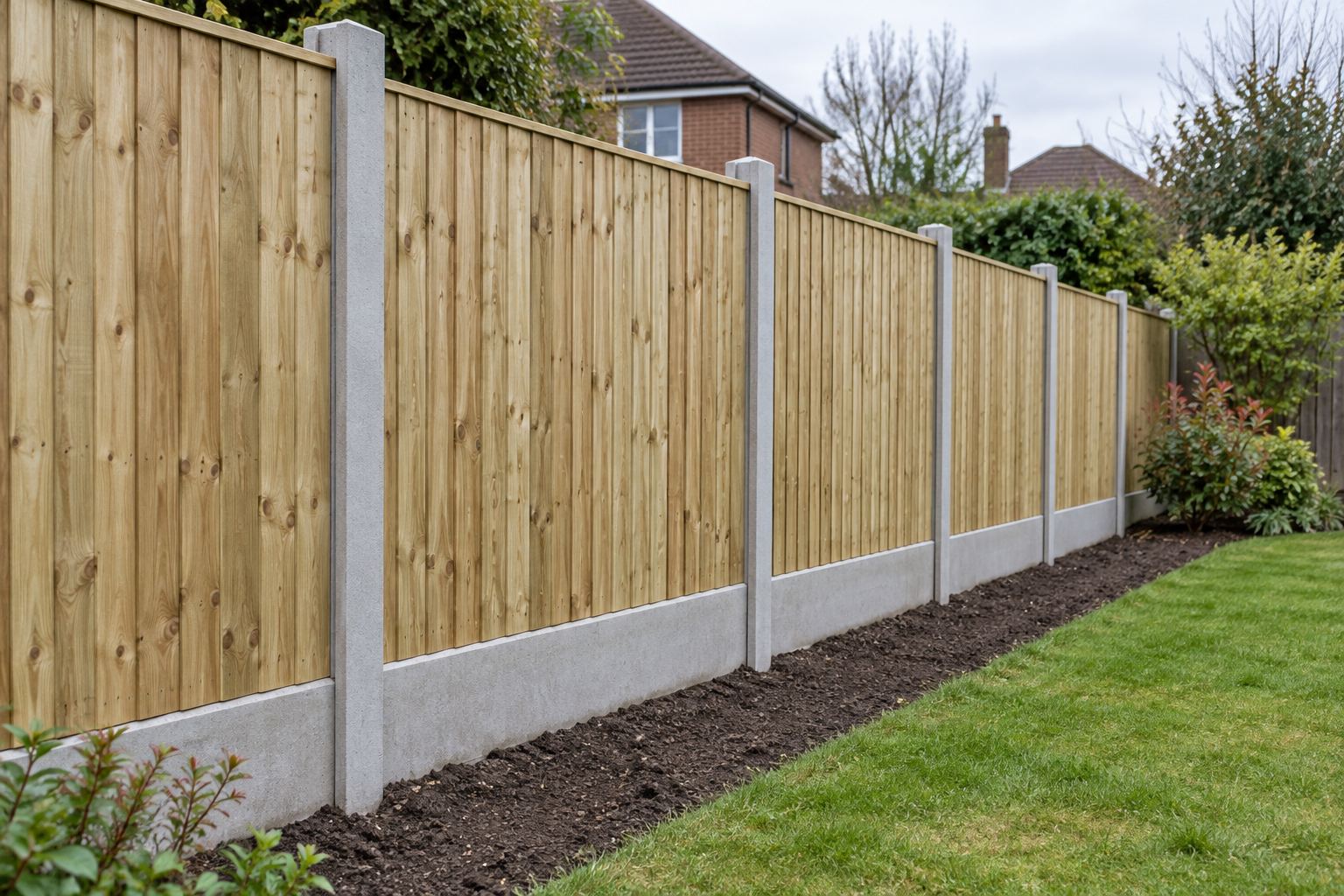
The work is heavy and dusty. A post set out of plumb, or in a hole that is too shallow, may move under wind load.
Signs you need concrete fence post installation
- Posts rock or snap off at ground level
- Timber at the base is soft, black or crumbling
- The fence leans or sags in the middle of a run
- Fixings pull out of rotten post faces
- Repairs keep failing in the same part of the boundary
- The garden is on wet clay and timber posts rot within a few years
Concrete Fence Post Installation: methods and options explained
- Full concrete post replacement. The old post and footing come out and a new slotted post is set in fresh concrete. This replaces the full support.
- Concrete repair spur. A short concrete support is bolted to sound timber above a failed base. It is only suitable if enough of the existing post can be retained.
- Post-and-board system. New concrete posts take gravel boards and then panels or boards, so no timber touches the soil.
- Heavy-duty or tall posts. Taller fences, or those on exposed ground, need longer posts set deeper, with wider holes to resist wind load.
What to include when asking for a quote
Count the posts and say how tall they stand above ground. Note whether they have snapped, rotted or just loosened, and whether anything attached to them, such as panels, rails or a gate, has to come off first.
Say whether the soil is clay, stone, sand or waterlogged, and whether tree roots or a drain run under the line. Hand digging in that kind of ground takes much longer than a clear patch of garden.
A quote should say the post length and section, the hole depth, whether old footings are removed, how long the concrete will be left to cure and who clears the spoil. Check that gravel boards, rails and panels are re-fitted in the price.
How much does concrete fence post installation cost?
| Type of job | Typical cost |
|---|---|
| One or two posts replaced, with gravel boards | £100–£250 |
| Four to six posts along a run | £250–£550 |
| Whole boundary re-posted, or posts in hard or waterlogged ground | £550–£800+ |
These are indicative UK budgeting figures, not fixed quotes. Hard or waterlogged ground and removal of old footings can take a job above the range.
Concrete posts cost more than timber on day one but remove the repeat cost of replacing rotten posts. Ask for a timber alternative if you want to compare.
The concrete fence post installation process: what to expect
- Survey. The contractor checks the posts, the ground and the line of the fence.
- Dig out. Old posts and their concrete footings are removed.
- Set the posts. New concrete posts go into holes, are plumbed, braced and filled with concrete.
- Cure. The concrete is left to set before any weight goes on.
- Re-fit. Gravel boards, rails and panels are slotted back and the site is cleared.
Planning permission and building regulations
Planning rules differ across the UK. Check with the local planning authority before changing a boundary, especially beside a road or at a listed property. The linked Planning Portal guidance is for England; local restrictions and removed permitted development rights can affect what is allowed. See the Planning Portal guidance on fences, gates and garden walls.
Digging deep holes can hit buried services, so a careful contractor will check before they start; LinesearchbeforeUdig offers free plans. No Building Regulations approval is normally needed for fence posts.
How to choose a contractor for concrete fence post installation
- Is the removal of old footings included in the price?
- What depth and concrete mix will they use?
- How do they check for buried pipes and cables?
- Will the posts be left to cure before panels go on?
- What guarantee do they give on the posts?
Frequently asked questions
Are concrete fence posts better than timber?
They do not rot at the base and often last over 25 years. They are heavier, harder to install and cost more than timber, but they remove the usual weak point of a fence.
How deep should a fence post be set?
Post depth depends on fence height, ground conditions and wind exposure. The installer should follow the post supplier's guidance and allow enough post below ground without reducing the required finished height.
Can concrete posts be used with timber panels?
Yes. Slotted concrete posts can hold compatible timber panels above gravel boards. Site-built closeboard needs suitable connections for its rails.
What about concrete repair spurs?
A concrete repair spur supports a timber post where the base has failed. Enough sound timber must remain for secure bolts; otherwise the post needs replacing.